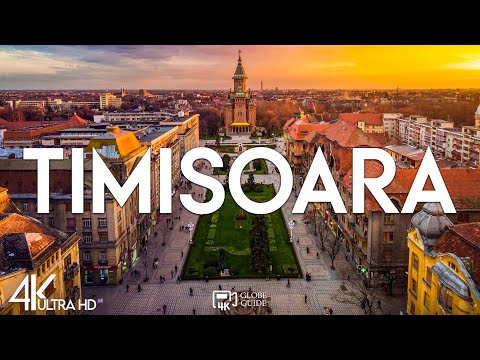
Timișoara
Timișoara, officially the Municipality of Timișoara, is the capital city of Timiș County, Banat, and the main economic, social and cultural center in western Romania. Located on the Bega River, Timișoara is considered the informal capital city of the historical Banat region. From 1848 to 1860 it was the capital of the Serbian Vojvodina and the Voivodeship of Serbia and Banat of Temeschwar. With 250,849 inhabitants at the 2021 census, Timișoara is the country's fifth most populous city. It is home to around 400,000 inhabitants in its metropolitan area, while the Timișoara–Arad metropolis concentrates more than 70% of the population of Timiș and Arad counties. Timișoara is a multicultural city, home to 21 ethnic groups and 18 religious denominations. Historically, the most numerous were the Swabian Germans, Jews and Hungarians, who still make up 6% of the population in Timișoara.
The Hungarian name of the city, Temesvár, was first recorded as Temeswar in 1315. It refers to a castle (vár) on the Timiș River (Temes). Timiș belongs to the family of hydronyms derived from the Indo-European radical thib 'swamp'. The Romanian and German oikonyms (Timișoara and Temeschburg, respectively) derived from the Hungarian form. The Ottoman administration used Temeşvar which was derived from Temesvár. The Habsburg/Austrian authorities also used Temeschwar, Temeswar or Temeschburg, names that have become commonplace in current usage. The name of the city comes from the river which passes the city, Timișul Mic (German: Kleine Temesch; Hungarian: Kistemes), hydronym which was in use until the 18th century when it was changed to Bega or Beghei.
Kingdom of Hungary (1212–1526) Eastern Hungarian Kingdom (1526–1551) Kingdom of Hungary (1551–1552) Ottoman Empire (1552–1716) Habsburg Monarchy (1718–1779) Kingdom of Hungary (1779–1849) Austrian Empire (1849–1867) Austria-Hungary (1867–1918) (de jure Hungary until 1920) Banat Republic (1918) (de facto) Kingdom of Serbia (1918) (de facto) Kingdom of Yugoslavia (1918–1919) (de facto) Kingdom of Romania (1920–1947) (de facto from 1919) Romanian People's Republic (1947–1965) Socialist Republic of Romania (1965–1989) Romania (1989–present)
Early history
The southeastern part of the Pannonian Basin is bounded by the Mureș, the Tisza and the Danube; the region was very fertile and already offered favorable conditions for food and human livelihood in 4000 BC. Archeological remains attested the presence of a population of farmers, hunters and artisans, whose existence was favored by mild climate, fertile soil and abundant water and forests. The first identifiable civilization in Banat were the Dacians who left traces of their past. Several Romanian historians have advanced the idea that the current location of Timișoara corresponds to the Dacian settlement of Zurobara. Although its location is unknown, the coordinates given by geographer Ptolemy in Geographike Hyphegesis place it in the northwest of Banat.
Middle Ages
It is assumed that in the 9th century, Knyaz Glad ruled over these lands, accepting Hungarian sovereignty, though no contemporary accounts exist. Timișoara was first officially mentioned in 1212 as the Roman castrum Temesiensis or castrum regium Themes. This year is disputed by historians of the opinion that the city's first documentary mention comes from 1266, when heir apparent Stephen V of Hungary donates part of the Tymes fortress, built by his father, Béla IV, to Count Parabuch. The city was destroyed by the Tatars in the 13th century, but the city was rebuilt and grew considerably during the reign of Charles I of Hungary, who, upon his visit there in 1307, ordered the strengthening of the fortress with stone walls and the building of a royal palace. The palace was built by Italian craftsmen and was organized around a rectangular court having a main body provided with a dungeon or a tower. He even moved the royal seat from Buda to Timișoara between 1316 and 1323. Timișoara's importance also grew due to its strategic location, which facilitated control over the Banat plain.
Ottoman rule (1552–1716)
The fall of Belgrade in 1521 and the defeat at Mohács in 1526 caused the division of the Hungarian Kingdom in three parts, and Banat became the object of contention between the Habsburg Kingdom of Hungary and Ottomans. After a failed siege in 1551, the Turks regrouped and returned with a new strategy. On 22 July 1552, a 160,000-strong army led by Kara Ahmed Pasha conquered the city and transformed it into a provincial capital in the newly established province of (Temeşvar Eyalet). The Eyalet included most of Banat and southern Crișana. Local military commander, István Losonczy, and other Christians were massacred on 27 July 1552 while escaping the city through the Azapilor Gate. After the death of John Zápolya, Habsburgs tried to obtain Transylvania and Banat, including Timișoara, with mixed results; Transylvania even entered into dual vassalage for a time.
Habsburg rule (1716–1860)
After the victory at Petrovaradin on 5 August 1716, the Austrian army led by Prince Eugene of Savoy decided to conquer Timișoara. The Ottoman military, the kuruc and the Turkish civilian population were forced to leave the city after a 48-day siege marked by repeated bombings that destroyed much of the city's buildings. After the Treaty of Passarowitz (1718), the Banat of Temeswar became the province of the Habsburg monarchy under the German name of Temeschburg and was proclaimed a "possession of the Crown", with a military administration which ruled it until 1751 when it was replaced by a civil one. After the conquest of Banat, the imperial authorities in Vienna began an extensive process of colonization, inviting especially German Catholics from Württemberg, Swabia, Nassau, etc. who would become known as Banat Swabians. In Temeschburg, the Swabians settled mainly in Fabric, where they strongly developed craftsmanship. The main function of the town during this period was as a military fortress. The existing fortifications could not cope with the new military techniques, so the entire fortress was rebuilt in a late, flat and inconsistent adaptation of the Vauban style. It had an area ten times greater than the medieval Turkish fortress. Between 1728 and 1732, the Bega River was regulated into a navigable canal.
19th–20th centuries
In 1860, the Voivodeship of Serbia and Banat of Temeschwar was abolished and most of its territory was incorporated into the Habsburg Kingdom of Hungary, although direct Hungarian rule began only following the Austro-Hungarian Compromise of 1867, after the establishment of the dual monarchy. As part of Austria-Hungary, the city experienced a fast economic and demographic growth. Credit institutions invested large sums in the development of local industry; at the turn of the 20th century there were many enterprises here: two breweries, an iron foundry, a match factory, a brick factory, a gas factory, a chain factory, a hat factory, a chocolate factory, etc. In this period horse-drawn tram, telephone and street lighting were introduced and roads were paved.
After World War I
On 31 October 1918, local military and political elites established the Banat National Council, together with representatives of the region's main ethnic groups: Germans, Hungarians, Serbs and Romanians. On 1 November, they proclaimed the short-lived Banat Republic.[citation needed] In the aftermath of World War I, the Banat region was divided between the Kingdom of Romania and the Kingdom of Serbs, Croats and Slovenes, and Timișoara came under Romanian administration after Serbian occupation between 1918 and 1919. The city was ceded from Hungary to Romania by the Treaty of Trianon on 4 June 1920. In 1920, King Ferdinand I awarded Timișoara the status of a University Center, and the interwar years saw continuous economic and cultural development. A number of anti-fascist and anti-revisionist demonstrations also took place during this time.[citation needed]
Timișoara is located at the intersection of the 45th parallel north with the 21st meridian east. As a mathematical position, it is in the Northern Hemisphere, almost equally distant from the North Pole and the equator, and in the Eastern Hemisphere, using Central European Time. The local time of the city (considered after the meridian) is 1 h 25' 8" ahead of the Greenwich Mean Time, but it is 34' 52" behind the official time of Romania (Eastern European Time). Timișoara lies at an altitude of 90 meters on the southeast edge of the Banat Plain, part of the Pannonian Plain, near the divergence of the Timiș and Bega rivers. The waters of the two rivers form a swampy and frequently flooded land. Timișoara developed on one of few places where the swamps could be crossed. These constituted a natural protection around the fortress for a very long time and favored a wet and insalubrious climate, which spread plague and cholera and kept the number of inhabitants relatively low, preventing civic development. With time, these rivers were drained, dammed and diverted. Due to the hydrographical projects undertaken in the 18th century, the city no longer lies on the Timiș River, but on the Bega Canal. This improvement of the land was made irreversible by building the Bega Canal (started in 1728) and by the complete draining of the surrounding marshes. The city lies only 0.5 to 5 meters above the water table, which disallows the construction of tall buildings. The rich black soil and relatively high water table make this a fertile agricultural region.
Seismicity
Timișoara is a fairly active seismic center, but of the many earthquakes observed, few have exceeded magnitude 6 on the Richter scale. There are two active seismic faults that cross the western part of the city. The earthquakes recorded in the region are normal earthquakes, of crustal type, with depths of foci between 5 and 30 km (3.1 and 18.6 mi).
Flora and fauna
In the past, there were extensive oak forests between the Tisza and Timiș. Over time, they were cleared to obtain the wood needed to build the fortress and houses, as well as to gain arable land. Today, except for the areas forested with Turkey oak and Hungarian oak (Green Forest, Bistra Forest, Timișeni–Șag Forest), the territory falls within the anthropogenic forest steppe that characterizes the entire Pannonian Basin. The landscape is diversified by meadow vegetation, along the main rivers, in which softwood trees predominate: willows, poplars, alders. Within the city limits is the Green Forest (Romanian: Pădurea Verde), a forest massif with an area of about 724 ha (1,790 acres), systematically arranged in squares of 15 ha (37 acres). The forest is man-made; first organization plans were carried out in 1860 by the Hungarian Forest Service. About 20 km (12 mi) southeast of Timișoara is the Bazoș Dendrological Park, a forest reserve which since 1994 has the status of protected area. The first trees of the reserve were brought in 1909 from the Harvard University nursery. Today, the reserve includes 800 different species of trees and shrubs and is part of the International Association of Botanical Gardens.
Hydrography
The main watercourse is the Bega River, the southernmost tributary of the Tisza. Springing from the Poiana Ruscă Mountains, Bega is canalized, and from Timișoara to its outflow it was arranged for navigation (115 km [71 mi]). The Bega Canal was built between 1728 and 1760, but its final arrangement was made later. The Bega Canal was designed for the access of barges of 600–700 tons and an annual transport capacity of three million wagons. From the multitude of arms that existed before the canalization of Bega, only Bega Moartă (Dead Bega; in the Fabric neighborhood) and Bega Veche (Old Bega; to the west, flowing through Săcălaz) are preserved inside the city.
Climate
Like parts of Romania, Timișoara exhibits a transitional humid continental (Köppen: Dfb) and humid subtropical climate (Köppen: Cfa), characteristic of the southeastern part of the Pannonian Basin, with some sub-Mediterranean influences. The dominant air masses, during spring and summer, are the temperate ones, of oceanic origin, which bring significant precipitations. Frequently, even in winter, humid air masses arrive from the Atlantic, bringing significant rains and snows, less often cold waves. From September to February there are frequent penetrations of continental polar air masses, coming from the east. In Banat, the influence of cyclones and hot air masses from the Adriatic Sea and the Mediterranean Sea is also strongly felt, which in winter generate complete thawing and in summer impose periods of stifling heat.
From a demographic point of view, Timișoara is defined, according to the Zipf's law, as a second-tier city, along with Iași, Constanța, Cluj-Napoca and Brașov, with extensive macro-territorial functions and having the second largest functional urban area, after Bucharest, of over 5,000 km2 (1,900 sq mi). In 2013, Bucharest and Timișoara were also the only metropolitan European growth areas (MEGAs) in Romania. Nationally, Timișoara has been recognized as the largest polarizing center in western Romania. According to the 2021 census, the population of Timișoara amounted to 250,849 inhabitants, a decrease compared to the previous census in 2011, when 319,279 inhabitants were registered. However, these figures are questioned by local authorities and sociologists due to the defective way in which the census was conducted. According to the mayor's office and local population records, Timișoara numbers over 309,000 inhabitants as of 2023. The population of the city represents roughly 38% of the population of Timiș County, 15% of the population of the West development region and 1.3% of the total population of Romania. As defined by Eurostat, the Timișoara functional urban area has a population of 364,325 inhabitants (as of 2018).
Ethnic minorities
Timișoara has stood out since ancient times as an ethnically diverse city. In 1910, the largest community was represented by Germans, followed by Hungarians, Romanians, Jews, Serbs and many other smaller communities, such as Czechs, Slovaks, Croats, Romas, Bulgarians, Poles, etc. The figures and percentage ratios are much changed today, but the multiethnic aspect of the city persists. Nowadays, 85% of the inhabitants are Romanians, while the minorities are much more diverse due to the presence of Asians, Italians, Muslims, and fewer Germans and Hungarians. Despite this, Timișoara is the city with the largest population of Germans in Romania. The decline of German and Hungarian communities is mainly due to assimilation (for instance, 64% of Hungarians in Timișoara live in mixed marriages), migration and low birth rates. Timișoara is also home to an important Serb community, which in 2011 numbered almost 5,000 people. Many of them use Serbian as a second language, preferring Romanian. Serbian is more common among older generations educated in it.
Languages
Timișoara's linguistic landscape is shaped by its complex historical, cultural, and demographic evolution. Romanian is the official and predominant language, spoken by the vast majority of the population. Reflecting the city's ethnic diversity, several minority languages continue to be present, including Hungarian, German, and Serbian, particularly within older generations and specific ethnic communities. Beyond these, languages such as Slovak, Bulgarian, and Romani have also been part of the city's linguistic fabric for centuries. While Yiddish, once widely spoken among the Jewish population, has nearly vanished, German dialects – especially those of the Swabian (Schwäbisch) variety – remain in use in some communities. In recent decades, the city has experienced increased linguistic diversity due to new waves of migration. Additionally, foreign languages play a significant role in education and daily life: English is widely spoken by younger generations and in professional settings, while French, German, Italian, and Spanish are commonly taught in schools.
Religion
Although much changed throughout its history, the religious composition of Timișoara is diverse. If in 1910 most of the inhabitants were Roman Catholics, in 2011 75% declared themselves Romanian Orthodox. In Timișoara there are 80 churches, 12 of which were built after 1989; 41 belong to the Orthodox Church, eight to the Roman Catholic Church and three to the Greek Catholic Church. In addition, there are three synagogues in Cetate, Fabric and Iosefin neighborhoods, all three built before World War I, when Jews accounted for 10% of the city's population; the Orthodox synagogue in Iosefin and the central Neolog synagogue still hold regular religious services. Timișoara is the seat of the Archiepiscopate of Timișoara, the see of the Metropolis of Banat, as well as the seat of the Diocese of Timișoara, one of the six Roman Catholic dioceses in Romania.
Administration
The first free local elections in post-communist Timișoara took place in 1992. The winner was Viorel Oancea, of the Civic Alliance Party (PAC), which later merged with the National Liberal Party (PNL). He was the first officer who spoke to the crowd of revolutionaries gathered in Opera Square. The 1996 elections were won by Gheorghe Ciuhandu, of the Christian Democrats (PNȚ-CD). He had four terms, also winning elections in 2000, 2004 and 2008. Meanwhile, Ciuhandu took over the Christian Democratic Party and ran for president of Romania in 2004. Nicolae Robu (PNL) was elected mayor in 2012 and again in 2016. In 2020, Dominic Fritz, a native of Germany, was elected mayor on behalf of the USR with support from the FDGR. He won a new mandate in 2024 on behalf of the United Timișoara Alliance (USR–PMP–FD–UDMR).
Justice system
Timișoara has a complex judicial structure due to its role as the capital of Timiș County. The local judicial body is the Timișoara Court of Justice, which operates under the authority of the Timiș County Tribunal. This tribunal also oversees the courts in Lugoj, Deta, Sânnicolau Mare, and Făget. Appeals and more serious cases from these courts are handled by the Timișoara Court of Appeals. Additionally, the city is home to the county's commercial and military tribunals. Timișoara maintains its own municipal police force, Poliția Municipiului Timișoara, which is responsible for law enforcement throughout the city and operates several specialized divisions. The headquarters is located on Andrei Mocioni Street near the city center, with five precincts distributed across the city. The municipal police operate under the authority of the County Police Inspectorate, based on Take Ionescu Boulevard. Additionally, the City Hall runs its own community police force, Poliția Primăriei, which focuses on local community matters. Timișoara is also home to the County Gendarmerie Inspectorate.
Timișoara is one of the most dynamic economic centers in Romania. Based on its proximity to the western border, Timișoara has managed to attract many foreign investments in recent years, forming, together with Arad, the second largest area in Romania in terms of economic mass. By the mid-2000s, the foreign investments in Timișoara amounted to €753 per capita, compared to €450 per capita at county level. Most of these investments come from the EU countries, especially from Italy, Germany and France. Similar to other growth poles in Romania, the services sector has developed significantly in recent years, accounting for half of the revenues. After the fall of communism and the transition to a market economy, the private sector grew steadily. In the first decade of the 21st century, Timișoara has experienced an economic boom as the amount of foreign investment, especially in high-tech sectors, has risen. In an article in late 2005, French magazine L'Expansion called Timișoara Romania's economic showcase, and referred to the increased number of foreign investments as a "second revolution". In 2016, Timișoara was awarded by Forbes as the most dynamic city and the best city for business in Romania. Between 2000 and 2013, Timișoara had the highest growth rate of GDP per capita, surpassing even Bucharest. The local economic development has been reflected accordingly in the unemployment figures. For instance, in December 2019, the unemployment rate in Timișoara was among the lowest in the country, with only 0.8%.
Industrial sector
After 1989, major changes took place in the structure of industrial activities in Timișoara due to the restructuring and retrofitting processes, industrial production currently including both traditional sub-branches and new, modern and dynamic ones. Unlike cities such as Cluj-Napoca, Iași or Bucharest, the localization of industry within the city is specific to Timișoara. The main industrial groups in the city can be structured in three types: urban industrial areas, with large area and complex profile (Calea Buziașului, Freidorf, pericentral area along the railway, Calea Șagului, etc.), industrial platforms with unitary profile (UMT and Solventul) and dispersed industrial units, respectively. In recent decades, industrial areas have developed along major road or rail arteries, with a tendency to group units by industrial profiles.
Office sector
The office sector has boomed in the last decade, the stock of class A offices available for rent reaching 290,000 m2 in 2020, almost 10% of Bucharest's stock. The return on investment in office buildings exceeds the level in Bucharest (7%), standing at around 8.25%. The city has the lowest vacancy rate of class A office spaces, 5% in 2014. AFI Park (formerly City Business Center) is the main office park in Timișoara, located in the city center. Completed in 2015, the complex is fully leased, with tenants including international companies such as Accenture, SAP, Deloitte, Wipro, IBM, Visma, Hella, etc. Named the greenest office project in Romania by BREEAM, Vox Technology Park was completed in early 2018. Bega Business Park is located near the historic center. The first two buildings were completed in 2015 and early 2018, respectively, and are fully occupied by Nokia's campus. Under construction are ISHO Offices, part of a larger project, and United Business Center. The latter will include the tallest office building in Romania (155 m).
IT&C sector
At national level, Timișoara is one of the poles of the most intense activities in the IT industry. Well-known companies such as Google, Microsoft, IBM, Intel, Nvidia, Siemens, Nokia, Huawei, Atos, Accenture, Endava, Bitdefender or Visteon have offices in the city, supporting – through the hubs and the digital workshops created – start-ups and SMEs in the field. Before the rapid expansion of Cluj-Napoca, Timișoara concentrated the most IT professionals after Bucharest. In 2014, Timișoara had 7,000 employees in the field. In the same year, the Incuboxx cluster was inaugurated. Incuboxx is the largest IT&C business incubator in Romania, which includes 54 office spaces addressed to entrepreneurs and companies with local capital in the field.
Real estate sector
The real estate market in Timișoara, supported by the upward economic trend, has been booming lately. In 2017, about 4,000 living spaces were delivered to the market, an increase of almost 60% compared to the previous year, most of the projects representing high-rise residential complexes, addressed to the mass and mid-market segments. In the first nine months of 2016, according to the National Agency for Cadastre and Real Estate Advertising, over 32,000 sale/purchase transactions were concluded, making Timiș County the largest real estate market in Romania after Bucharest–Ilfov. 87% of them took place in Timișoara and neighboring communes. Among the largest residential complexes in Timișoara are ISHO, Adora Forest, Vivalia Grand, XCity Towers, Vox Vertical Village, Ateneo and City of Mara.
Commercial sector
Bega Shopping Center is the only shopping center in the center of Timișoara and the first in the city. Bega Shopping Center is structured on six levels and has a leasable area of 7,500 m2, of which 1,300 are allocated to a Carrefour supermarket. Bega Group, the holding company that owns Bega Shopping Center, has opened three other retail parks in Buziașului, Circumvalațiunii and Lipovei. Iulius Mall was inaugurated in October 2005. Following an investment by Iulius Group and Atterbury Europe, Iulius Mall has been integrated into a large urban regeneration project – Iulius Town, complementing it with retail, office and entertainment functions. Iulius Town has the largest shopping area in Romania (120,000 m2), a space that brings together over 450 stores. The estimated annual traffic for Iulius Town is over 20 million visitors.
Tourism
Timișoara constitutes the core of regional tourism, receiving 80% of the area's tourists. It draws 250,000–300,000 tourists each year and is distinguished by its safety, quality of hospitality, and gastronomic excellence. Recreational tourism (such as city breaks and visits to friends and relatives) accounts for the largest share, followed by business and study tourism. The majority of tourists are young, well-educated individuals, primarily from Romania and other European countries. The average stay is two nights. In 2013, in Timișoara there were 107 accommodation units (comprising 49 hotels, seven hostels, 50 pensions, and an international campsite) totaling 5,547 accommodation places.
Pre-university education
Preschool education takes place in 70 kindergartens; the primary education in 47 schools; the secondary education in 36 high schools; the post-secondary education in 11 post-secondary schools; and the master workman education in six foreman schools. The school network also includes two special high schools for students with disabilities, three schools of inclusive education, five seminaries, a special school for students with amblyopia, two educational assistance centers and a Waldorf high school. The private education system includes an international school and high school with teaching according to the British curriculum, an English-language kindergarten and primary school, as well as a nursery and kindergarten with teaching according to the Finnish curriculum.
Higher education
Higher education has a tradition of over 100 years, with the establishment of the Polytechnic University in 1920. From then until today, Timișoara has become the most important university and academic center in western Romania, with about 40,000 students enrolled in undergraduate and postgraduate study programs in four public and two private universities. There are branches of the National Alliance of Student Organizations in Romania and AIESEC. Student organizations are very active, known for events such as StudentFest, the largest international student art and culture festival in Southeast Europe or the ten-day International Student Week. The Polytechnic University is one of the largest and most famous technical universities in Central and Eastern Europe. In 2011 it was classified by the Ministry of Education in the category of universities of advanced research and education, the highest position that a university in Romania can reach. In the 2018 SCImago Institutions Rankings, the Polytechnic University is on the third place among the Romanian universities with research activity. Established by royal decree in 1944, the West University is the largest university in the city in terms of student numbers. The West University is one of the five members of the Universitaria Consortium, the group of elite Romanian universities. In 2018, the West University was present in 19 international rankings of universities, one of the top-ranked in Romania. One of the six medical universities in Romania is located in Timișoara – the Victor Babeș University of Medicine and Pharmacy. The fourth public university in Timișoara, specialized in life sciences and veterinary medicine, is the King Michael I University of Life Sciences.
Scientific research
Several institutes operate within the Timișoara branch of the Romanian Academy: the National R&D Institute for Electrochemistry and Condensed Matter, the National R&D Institute for Welding and Materials Testing, the Titu Maiorescu Institute of Banat Studies, the Coriolan Drăgulescu Institute of Chemistry and the Astronomical Observatory. In the patrimony of the West University there are several research centers, such as: the Institute of Advanced Environmental Research, the Nicholas Georgescu-Roegen Interdisciplinary Training and Research Platform, the Creation Center of Contemporary Visual Arts, the Research Laboratory in Structural and Computational Chemistry–Physics for Nanosciences and QSAR, the Research Center in Criminal Sciences, the East European Center for Research in Economics and Business, the Center for Romance Studies, the Research Center in Computer Sciences, the Center for Social Research and Development, the Institute of Socio-Political Research, etc. Also in Timișoara there are branches of the Academy of Medical Sciences and the Academy of Technical Sciences, respectively.
Due to the specialized university programs, Timișoara is a research center in the fields of medicine and public health; there are branches of the Academy of Medical Sciences and the Student Society of Surgery, the headquarters of the Romanian Hemophilia Association, the Romanian Society of Medical Informatics and the Romanian Society of Pediatric Otorhinolaryngology, as well as the regional training center in emergency medicine, operated by SMURD. In Timișoara there are eight hospitals, seven publicly owned and one private: There are also: six integrated specialized outpatient clinics (four public and two private); three ambulance services (one public and two private); 494 dental offices; 229 family medicine offices; 138 specialized offices; seven medical expertise offices and 24 work capacity recovery offices; 39 school dispensaries; 11 student dispensaries; a sports dispensary; 63 pharmacies and 32 pharmaceutical warehouses.
Timișoara is an important regional road and railway hub, connecting the city to Bucharest and other major cities, as well as Romania to Hungary and Serbia, and further to Western Europe. It is located along the Pan-European Corridor IV linking Germany to Turkey and has access, thanks to the Bega Canal, to the Pan-European Corridor VII. Furthermore, Timișoara is crossed by two TEN-T core network corridors: Orient/East–Med and Rhine–Danube (waterway focus).
Road transport
The street plot of Timișoara is composed of 1,278 streets totaling almost 750 km (470 mi). The street network is based on a radial model, consolidated by a series of five concentric rings, none of them completely built. Unlike other cities of similar size, there is no predominant corridor in terms of loading, with traffic volumes distributed fairly evenly across a series of radial and circular arteries. The shape of the road network outside the city is web-like, all the main roads in the county converging towards the capital city. In the northern part of the city there is a bypass; its southern extension is currently under construction. The city is crossed in the northeast by the A1 motorway, a segment that continues with the M43 motorway in Hungary. The A1 is connected near Lugoj to the A6 motorway, which is under construction.
Public transport
Timișoara's public transport network consists of nine tram lines, eight trolleybus lines and 31 bus lines and is operated by STPT (Societatea de Transport Public Timișoara). The network covers all the important areas of the city and it also connects Timișoara with some of the communes of the metropolitan area. 45% of urban public transport is served by trams, 22% by trolleybuses, 18% by buses and the remaining 15% by water buses and alternative means of transport. In 2019, Timișoara became the second city in Romania to introduce public school transport, after Cluj-Napoca; as of 2020, it is served by 14 lines. Timișoara has a well-developed market for taxi services. There are also several car rental companies. Alternatively, short- and long-distance carpooling platforms operate in Timișoara, such as Uber, Bolt or BlaBlaCar.
Rail transport
Timișoara has the oldest and the densest railway network in Romania, with over 91.9 km (57.1 mi) of lines for 1,000 km2 (390 sq mi) of territory, although some of the components are no longer operational due to low demand and lack of maintenance. Therefore, Timișoara is the most important rail hub in Timiș County and in western Romania. Most of the railway lines that intersect in Timișoara are secondary lines; the most important are line 900 from Bucharest, with international connections to Serbia and the main line Timișoara–Arad–Oradea, which ensures the connection with line 200 (Brașov–Sibiu–Arad–Curtici) and, implicitly, with Hungary. The city has five stations (Timișoara North, Timișoara West, Timișoara South, Timișoara East and Timișoara CET) and a triage station (Ronaț Triaj). The main passenger station is Timișoara North, built in 1897 and undergoing extensive rehabilitation since 2021. The old station building, built in neoclassical style, was badly damaged by the Allied bombing of 1944, so it was rebuilt in socialist classical style. Timișoara North is one of the busiest stations in Romania, with an average of 174 passenger trains/day and a flow of 5,530 passengers/day.
Air transport
Located 12 km (7.5 mi) from Timișoara, in the northeastern part of the city, Traian Vuia International Airport is the fourth-busiest Romanian airport in terms of passenger numbers (~1.2 million in 2022) and the most important air hub in the DKMT Euroregion. In 2017, it became the first airport in Romania certified by EASA. In 2018, Traian Vuia International Airport attracted 15.1% of the total number of passengers embarked at Romanian airports, 32.8% of the total tons of goods loaded and 13.2% of the total number of flights. Traian Vuia International Airport serves as an operational base for Wizz Air. As of 2021, the airport is undergoing expansion works, by adding two terminals – internal arrivals and external departures – and creating an intermodal center for freight transport.
Water transport
The Bega Canal is the first navigable canal built in Romania, connecting Timișoara with the Serbian town of Titel. Its total navigable length was 114 km (71 mi), of which 33 km (21 mi) on the Romanian territory. In 2018, repair works were started on the navigation infrastructure of the Bega Canal, which would allow the resumption of naval traffic between Timișoara and Serbia, halted in 1967. Since 2018, Timișoara is the first Romanian city with urban public transport by water, made with vaporetto-like boats on a single line with six stations.
Cycling and micromobility
Timișoara has the most developed integrated cycling system in Romania. Cyclists have access to more than 100 km (62 mi) of bike lanes, including 37 km (23 mi) outside the city via the Bega Canal cycle path, which connects Romania with Serbia, providing a direct connection to the European network of cycling routes – EuroVelo. Timișoara is the first city in Romania with a public bike-sharing system, VeloTM, inaugurated in 2015. The system has 440 bicycles in the 25 stations in the city and, depending on the season, is accessed by 1,000–1,500 people daily. In 2019, Timișoara introduced public transport with e-scooters.
Timișoara has the largest architectural ensemble of historic buildings in Romania (around 14,500), consisting of the urban patrimony of the neighborhoods of Cetate, Fabric, Iosefin and Elisabetin. Most of these buildings are part of the imperial heritage, a period of economic prosperity that left its mark on the city. The architectural diversity, represented by baroque, historicism, neoclassicism, Art Nouveau and Wiener Secession, earned Timișoara the nickname "Little Vienna". The oldest building in Timișoara is Huniade Castle, which today houses the Museum of Banat. Destroyed during the siege of 1849, the castle was later rebuilt, but still retains elements of the former castle built by John Hunyadi between 1443 and 1447, but also elements from the period of Charles I of Hungary. Timișoara is a city with a polynuclear urban structure. The current urban structure, the result of historical evolution, is relatively clear: in the middle of the urban agglomeration is the historic center (Cetate neighborhood) around which the other neighborhoods revolve. Due to their independent development, they have distinct features both functionally and architecturally. The center of today's Timișoara is the "successor" of the Austrian military fortress built mostly between 1732 and 1761. Today, only a few parts of the old city wall remain standing, namely the Theresia Bastion in the east and a few others which are located on the western limit of the old city wall. These were later listed as part of the architectural heritage of Timișoara.
Historic neighborhoods
The Cetate neighborhood, the political, administrative and cultural center of Timișoara, is divided into two distinct urban areas. The first area is the "inner city" of the 18th and 19th centuries. The whole area has the status of heritage site. The area houses the oldest buildings of the city, dating from the 18th century. The second area was established after 1900 on the lands liberated by the demolition of the fortifications. Construction in this area followed the trend at the time, the fin de siècle style. The Secessionist school of Banat was influenced by both Austrian and Hungarian styles, resulting from the direct participation of some architects from Budapest on various representative buildings. This style underwent two different stages: the first occurred approximately between 1900 and 1908 and was similar to Art Nouveau, with floral and curvilinear decorations, while the second, which continued until World War I, saw simpler, larger buildings with geometrical designs, similar to Viennese architecture at the time. Due to the fact that secessionism existed in Timișoara only between 1900 and 1914, its influence on more modest buildings was not as strong as that of eclecticism. If eclecticism became a true art of the masses, used in all buildings, secessionism remained a style of the elites, which penetrated Banat through cult architecture.
1919–1947: Neo-Romanian architecture
The neighborhoods of individual villas, the houses with several apartments and the religious and socio-cultural endowments dating from the first half of the 20th century, especially from the interwar period, predominate in the interstitial spaces between the historic neighborhoods, giving the respective areas the aspect of a garden city. The architecture of the new buildings erected in the interwar period kept some decorative elements widespread at the beginning of the 20th century, but the neo-Romanian style, then the modernist and cubist ones, became more and more popular. More and more projects have been entrusted to Romanian architects, from Timișoara or Bucharest. Outside the former walls of the fortress and in Elisabetin, numerous villas were built in which the influence of the modern style, of the Brâncovenesc style as well as the French influences are predominant, but also public buildings, emblematic for the new architectural line. In the interwar years, important buildings of the city were built according to the plans of the Bucharest architect Duiliu Marcu: the new facade of the Theater, the main building, the student dormitory and the laboratories of the Polytechnic Institute, the Capitol cinema, etc.
1947–1989: Socialist classicism
During the communist period, like other cities in Romania, Timișoara strictly followed the Soviet style. The architects did not have creative freedom, because the ministry imposed a firm control and an austerity regime, with small budgets. The evolution of the postwar architecture of the city was strongly influenced by the activity of the architect Hans Fackelmann, who designed, among others, the West University, one of the first modern constructions in Romania and the Ion Vidu National Art College. Despite the central policy of urban systematization, which saw entire historic neighborhoods demolished, such as the Uranus neighborhood in Bucharest, the Timișoara authorities did not demolish old buildings, but only "filled in", where there were no buildings. Thus were built the two blocks that close the front of Victory Square, on its eastern side, towards the Metropolitan Cathedral. In the late 1960s, the Communist Party called for the construction of a number of commercial venues, hotels, houses of culture, stadiums and sports halls in major cities. It was the period when the Bega store, the Continental and Timișoara hotels, the Youth House, the Modex fashion house, the Olimpia hall and others were built in Timișoara.
Post-revolution architecture (1990–present)
The reconnection, after 1989, of the Romanian architecture to the European architectural culture proved to be very difficult. Most of the projects and constructions did not yet have enough substance or inertially continued the decorativism of the previous period. Re-established in 1990 as a department within the Faculty of Constructions, the Timișoara school of architecture brought together architects from the late 1980s who, embracing the theoretical discourse of postmodernism, perpetuated the arts and crafts philosophy of the previous generation, either by a subtle return to historical tradition (Șerban Sturdza, Mihai Botescu or Radu Radoslav), or through a critical regional approach (Vlad Gaivoronschi, Ioan Andreescu or Florin Ionașiu). Constructions such as Austria House (Mihai Botescu), BRD Tower (Radu Radoslav), City Business Center (Vlad Gaivoronschi) or Reghina Blue Hotel (Ioan Andreescu) are linked to their names.