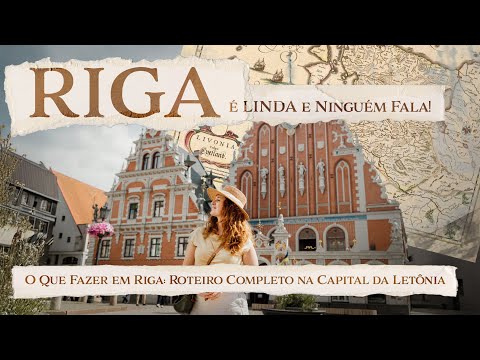
Riga
Riga, officially Riga State City, is the capital, primate, and largest city of Latvia and the second largest in the Baltics. Home to 588,911 inhabitants, the city accounts for a third of Latvia's total population. The population of Riga metropolitan area, which stretches beyond the city limits, is estimated at 847,162. The city lies on the Gulf of Riga at the mouth of the Daugava river where it meets the Baltic Sea. Riga's territory covers 307.17 km2 (118.60 sq mi) and lies 1–10 m (3–33 ft) above sea level on a flat and sandy plain.
The precise origin of the name is unknown; however, there are numerous and speculative theories for the origin of the name Riga: Nonetheless, the most reliably documented explanation is the affirmation by German historian Dionysius Fabricius (1610) that Riga's name comes from its already established role in trade: "Riga obtained its name from the buildings or warehouses found in great number along the banks of the Duna, which the Livs in their own language are accustomed to call Riae".[b] The "j" in Latvian rīja hardened to a "g" in German. English geographer Richard Hakluyt (1589) corroborates this account, calling Riga as Rie, as pronounced in Old Latvian. This is further supported by the fact that Riga is called Riia in Estonian (a language closely related to Livonian).
Archbishopric of Riga (vassal state of the Holy Roman Empire) 1201–1561 Imperial Free City 1561–1582 Polish–Lithuanian Commonwealth 1582–1629 Swedish Empire 1629–1721 Russian Empire 1721–1917 German Empire 1917–1918 Republic of Latvia 1918–1940 Latvian SSR 1940–1941 Nazi Germany 1941–1944 Latvian SSR 1944–1990 Republic of Latvia 1990–present In 2004, the arrival of low-cost airlines resulted in cheaper flights from other European cities such as London and Berlin, and consequently a substantial increase in numbers of tourists. On 21 November 2013, the roof of a supermarket collapsed in Zolitūde, one of the neighbourhoods of the city, possibly as a result of the weight of materials used in the construction of a garden on the roof. Fifty-four people were killed. Latvian President Andris Bērziņš described the disaster as "a large-scale murder of many defenceless people". Riga was the European Capital of Culture in 2014. During Latvia's Presidency of the Council of the European Union in 2015, the 4th Eastern Partnership Summit took place in Riga.
Founding
The river Daugava has been a trade route since antiquity, part of the Vikings' Dvina–Dnieper navigation route to Byzantium. A sheltered natural harbor 15 km (9.3 mi) upriver from the mouth of the Daugava—the site of today's Riga—has been recorded, as Duna Urbs, as early as the 2nd century. It was settled by the Livs, a Finnic tribe. Riga began to develop as a centre of Viking trade during the early Middle Ages. Riga's inhabitants engaged mainly in fishing, animal husbandry, and trading, later developing crafts, including bone, wood, amber, and iron. The Livonian Chronicle of Henry testifies to Riga having long been a trading centre by the 12th century, referring to it as portus antiquus (ancient port), and describes dwellings and warehouses used to store mostly flax, and hides. German traders began visiting Riga, establishing a nearby outpost in 1158.
Under Bishop Albert
The year 1201 also marked the first arrival of German merchants in Novgorod, via the Dvina. To defend territory and trade, Albert established the Order of Livonian Brothers of the Sword in 1202, which was open to nobles and merchants. The Christianisation of the Livs continued. In 1207, Albert started to fortify the town. King Philip invested Albert with Livonia as a fief and principality of the Holy Roman Empire. To promote a permanent military presence, territorial ownership was divided between the Church and the Order, with the Church taking Riga and two-thirds of all lands conquered and granting the Order a third. Until then, it had been customary for crusaders to serve for a year and then return home.
Hanseatic League
In 1282, Riga became a member of the Hanseatic League. The Hansa was instrumental in giving Riga economic and political stability, thus providing the city with a strong foundation which endured the political conflagrations that were to come, down to modern times.
Holy Roman Empire, Polish–Lithuanian Commonwealth, the Swedish and Russian Empires
As the influence of the Hanseatic League waned, Riga became the object of foreign military, political, religious and economic aspirations. Riga accepted the Reformation in 1522, ending the power of the archbishops. In 1524, iconoclasts during iconoclast riots targeted a statue of the Virgin Mary in the cathedral to make a statement against religious icons. It was accused of being a witch, and given a trial by water in the Daugava river. The statue floated, so it was denounced as a witch and burnt at Kubsberg. With the demise of the Livonian Order (1561) during the Livonian War, Riga for twenty years had the status of a free imperial city of the Holy Roman Empire before it came under the influence of the Polish–Lithuanian Commonwealth by the Treaty of Drohiczyn, which ended the war for Riga in 1581. In 1621, during the Polish–Swedish War (1621–1625), Riga and the outlying fortress of Daugavgrīva came under the rule of Gustavus Adolphus, King of Sweden, who intervened in the Thirty Years' War not only for political and economic gain but also in favour of German Lutheran Protestantism. During the Russo-Swedish War (1656–1658), Riga withstood a siege by Russian forces.
World War I
The 20th century brought World War I and the impact of the Russian Revolution of 1917 to Riga. As a result of the battle of Jugla, the German army marched into Riga on 3 September 1917. On 3 March 1918, the Treaty of Brest-Litovsk was signed, giving the Baltic countries to Germany. Because of the armistice with Germany of 11 November 1918, Germany had to renounce that treaty, as did Russia, leaving Latvia and the other Baltic States in a position to claim independence. Latvia, with Riga as its capital city, thus declared its independence on 18 November 1918. Between World War I and World War II (1918–1940), Riga and Latvia shifted their focus from Russia to the countries of Western Europe. The United Kingdom and Germany replaced Russia as Latvia's major trade partners. The majority of the Baltic Germans were resettled in late 1939, prior to the occupation of Estonia and Latvia by the Soviet Union in June 1940.
World War II and Soviet era
During World War II, Latvia was occupied by the Soviet Union in June 1940 and then was occupied by Nazi Germany in 1941–1944. On 17 June 1940, the Soviet forces invaded Latvia occupying bridges, post/telephone, telegraph, and broadcasting offices. Three days later, Latvian president Kārlis Ulmanis was forced to approve a pro-Soviet government which had taken office. On 14–15 July, rigged elections were held in Latvia and the other Baltic states, The ballots held the following instructions: "Only the list of the Latvian Working People's Bloc must be deposited in the ballot box. The ballot must be deposited without any changes." The alleged voter activity index was 97.6%. Most notably, the complete election results were published in Moscow 12 hours before the election closed. Soviet electoral documents found later substantiated that the results were completely fabricated. The Soviet authorities, having regained control over Riga and Latvia imposed a regime of terror, opening the headquarters of the KGB, massive deportations started. Hundreds of men were arrested, including leaders of the former Latvian government. The most notorious deportation, the June deportation, took place on 13 and 14 June 1941, estimated at 15,600 men, women, and children, and including 20% of Latvia's last legal government. Similar deportations were repeated after the end of World War II. The building of the KGB located at 61 Brīvības iela, known as 'the corner house', is now a museum. Stalin's deportations also included thousands of Latvian Jews. The mass deportation totalled 131,500 across the Baltics.
Riga is one of the largest cities in the three Baltic states: (Lithuania, Latvia, and Estonia).[citation needed] Riga is home to approximately one tenth of the three Baltic countries' combined population.
Administrative divisions
Riga's administrative divisions consist of six administrative entities: Central, Kurzeme and Northern districts and the Latgale, Vidzeme and Zemgale suburbs. Three entities were established on 1 September 1941, and the other three were established in October 1969. There are no official lower-level administrative units, but the Riga City Council Development Agency is working on a plan, which officially makes Riga consist of 58 neighbourhoods. The current names were confirmed on 28 December 1990.
Climate
The climate of Riga is humid continental (Köppen Dfb). The coldest months are January and February, when the average temperature is −2.1 °C (28 °F) but temperatures as low as −20 to −25 °C (−4 to −13 °F) can be observed almost every year on the coldest days. The proximity of the sea causes frequent autumn rains and fogs. Continuous snow cover may last eighty days. The summers in Riga are mild and rainy with an average temperature of 18 °C (64 °F), while the temperature on the hottest days can exceed 30 °C (86 °F).
The head of the city government of Riga (the Government of the State City of Riga, Latvian: Rīgas valstspilsētas pašvaldība) is the mayor, or officially the Chairman of the Riga State City Council (Latvian: Rīgas valstspilsētas domes priekšsēdētājs). The mayor is elected by the city council. The mayor is assisted by one or more Vice Mayors (deputy mayors). The current mayor since 27 June 2025 is Viesturs Kleinbergs from The Progressives party. He leads a coalition of The Progressives, the National Alliance party, the New Unity alliance (their faction includes members of Movement For! party) and the United List alliance. The city council is a democratically elected institution and is the final decision-making authority in the city. The Council consists of 60 members or deputies who are elected every four years. The Presidium of the Riga City Council consists of the Chairman of the Riga City Council and the representatives delegated by the political parties, alliances or electoral blocks elected to the City Council. The electoral list that surpass the 5% threshold then form according factions in the council.
With 591,882 inhabitants in 2025, Riga is one of the largest cities in the Baltic states, though its population has decreased from just over 900,000 in 1991 and the population of Vilnius has just outnumbered that of Riga. Notable causes include emigration and low birth rates. According to 2017 data, ethnic Latvians made up 44.03% of the population of Riga. Russians formed 37.88%, Belarusians 3.72%, Ukrainians 3.66%, Poles 1.83%, other ethnicities consisted 8.10%. By comparison, 62.7% of Latvia's total population was ethnically Latvian, 24.5% Russian, 3.1% Belarusian, 2.2% Ukrainian, 2.0% Polish, 5.5% are of other origins. In contrast, just five years before the Soviet occupation of Latvia, according to the 1935 Census, when the population of Riga was 385,063 inhabitants, ethnic Latvians made up 63% of the city's population. In addition, Jews formed 11.3%, Germans 10%, Russians 7.4% and Poles 4.1%, other ethnicities consisted 4.2%.
Riga is one of the key economic and financial centres of the Baltic states. Roughly half of all the jobs in Latvia are in Riga and the city generates more than 50% of Latvia's GDP as well as around half of Latvia's exports. The city boasts a diversified economy with strengths in information and communication technologies, global business services, manufacturing and a dynamic startup ecosystem. The biggest exporters are in wood products, IT, food and beverage manufacturing, pharmaceuticals, transport and metallurgy. Tourism is also a large industry in Riga and after a slowdown during the global economic recessions of the late 2000s, grew 22% in 2011 alone. The city benefits from strong transport links, including Riga International Airport, and an active seaport. The forthcoming Rail Baltica project is expected to further enhance Riga's connectivity and integration into the European transport network, with the potential to reinforce its position as a strategic centre for trade in Northern Europe.
Tourism
Riga is one of the leading travel destinations in the Baltic region in terms of overnight stays by foreign visitors. In 2024, the city welcomed over 1.1 million international tourists. Summer remains the peak season for tourism in Riga, however, it's also seeing a growing influx of visitors in December, largely due to the city's transformation into a festive destination during the holiday season. The Riga Christmas Market, located in the Old Town of Riga, serves as a key attraction during the Christmas period. The most popular attractions include the Riga Zoo, House of the Blackheads, Riga Central Market, the Latvian National Museum of Art and the Latvian National Museum of Natural History, as well as its historic Old Town and the Art Nouveau architecture found in high concentration the centre of the city.
Mežaparks Great Bandstand
The Mežaparks Great Bandstand (Latvian: Mežaparka Lielā estrāde) is an open-air bandstand in Mežaparks park. The Bandstand is the place where the Latvian Song and Dance Festival, one of the largest amateur choral and dancing events in the world and part of UNESCO Masterpieces of the Oral and Intangible Heritage of Humanity list, takes places every five years.
World Choir Games
Riga hosted the biannual 2014 World Choir Games from 9 to 19 July 2014 which coincided with the city being named European Capital of Culture for 2014. The event, organised by the choral foundation, Interkultur, takes place at various host cities every two years and was originally known as the "Choir Olympics". The event regularly sees over 15,000 choristers in over 300 choirs from over 60 nations compete for gold, silver and bronze medals in over 20 categories. The competition is further divided into a Champions Competition and an Open Competition to allow choirs from all backgrounds to enter. Choral workshops and festivals are also witnessed in the host cities and are usually open to the public.
Food
As a modern European capital, Riga offers a diverse selection of restaurants, from traditional Latvian cuisine to various international influences. Its fine dining establishments also include two Michelin-starred restaurants. Additionally, the city organizes Riga Restaurant Weeks in both spring and autumn, during which participating restaurants offer specially curated menus.
Music and nightlife
Positivus Festival, the largest music festival in the Baltics, takes place in Lucavsala, after relocating from the coastal town of Salacgrīva in 2022. Since then, it has featured performances by local and international artists like A$AP Rocky, Megan Thee Stallion, Sam Smith and Jamie XX. The nightlife in Riga is scattered around various locations – the biggest concentration of bars and nightclubs, mostly oriented on tourists, can be found in the Old Town, but many popular establishments can be found in various parts of Central Riga and beyond, in areas such as Avoti, Teika, Āgenskalns and others, as well as in creative quarters, for example Tallinas Kvartāls or Briāna Kvartāls.
The radio and TV tower of Riga is the tallest structure in Latvia and the Baltic States, and one of the tallest in the European Union, reaching 368.5 m (1,209 ft). Riga centre also has many great examples of Gothic revival architecture, such as the Kalpaka Boulevard Library, and a bevy of Art Nouveau architecture, as well as a medieval old town.
Art Nouveau
Riga has one of the largest collections of Art Nouveau buildings in the world, with at least 800 buildings. This is due to the fact that at the end of the 19th and beginning of the 20th centuries, when Art Nouveau was at the height of its popularity, Riga experienced an unprecedented financial and demographic boom. In the period from 1857 its population grew from 282,000 (256,200 in Riga itself and another 26,200 inhabitants beyond the city limits in the patrimonial district and military townlet of Ust-Dvinsk) to 472,100 in 1913. The middle class of Riga used their acquired wealth to build imposing apartment blocks outside the former city walls. Local architects, mostly graduates of Riga Technical University, adopted current European movements and in particular Art Nouveau. Between 1910 and 1913, between 300 and 500 new buildings were built each year in Riga, many of them in Art Nouveau style and most of them outside the old town.
Riga has a rich basketball history. In 1937, as the defending champions, in hosted the second edition of the EuroBasket tournament. In the 1950s, Rīgas ASK became the best club in the Soviet Union and also in Europe, winning the first three editions of the European Cup for Men's Champions Clubs from 1958 to 1960. In 1960, ASK was not the only team from Riga to take the European crown. TTT Riga clinched their first title in the European Cup for Women's Champion Clubs, turning Riga into the capital city of European basketball because for the first and, to date, only time in the history of European basketball, clubs from the same city were concurrent European men's and women's club champions. Riga hosted one of the groups for EuroBasket 2015, and will host again for the third time in 2025, this time also hosting the knockout phase and the final. It also hosted the women's Eurobasket tournament in 2009.
Sports events
The Riga Marathon, held annually in May, is one of the biggest sporting events in the country. In 2025 it recorded 40,122 participants from 109 countries around the world. The city has also hosted many notable one-off sports events, listed below.
Riga, with its central geographic position and concentration of population, has always been the infrastructural hub of Latvia. Several national roads begin in Riga, and European route E22 crosses Riga from the east and west, while the Via Baltica crosses Riga from the south and north. As a city situated by a river, Riga also has several bridges. The oldest-standing bridge is the Railway Bridge, which is also the only railroad-carrying bridge in Riga. The Stone Bridge (Akmens tilts) connects Old Riga and Pārdaugava; the Island Bridge (Salu tilts) connects Maskavas Forštate and Pārdaugava via Zaķusala; and the Shroud Bridge (Vanšu tilts) connects Old Riga and Pārdaugava via Ķīpsala. In 2008, the first stage of the new Southern Bridge (Dienvidu tilts) route across the Daugava was completed, and was opened to traffic on 17 November. The Southern Bridge was the biggest[dubious – discuss] construction project in the Baltic states in 20 years, and its purpose was to reduce traffic congestion in the city centre. Another major construction project is the planned Riga Northern transport corridor; its first segment detailed project was completed in 2015.