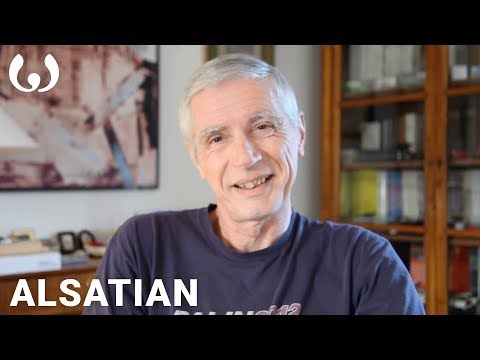
Alsatian dialect
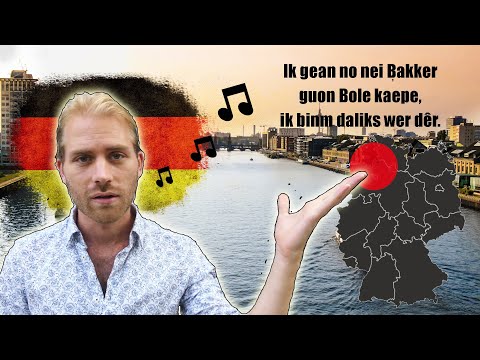
Alsatian is the group of Alemannic German and Franconian dialects spoken in most of Alsace, a formerly disputed region in eastern France that has passed between French and German control five times since 1681.
Alsatian is closely related to other nearby Alemannic dialects, such as Swiss German, Swabian, Markgräflerisch, Kaiserstühlerisch and the other Alemannic dialects of Baden. It is often confused with Lorraine Franconian, a more distantly related Franconian dialect spoken in the northwest corner of Alsace and in neighbouring Lorraine. Like other dialects and languages, Alsatian has also been influenced by outside sources. Words of Yiddish origin can be found in Alsatian, and modern conversational Alsatian includes adaptations of French words and English words, especially concerning new technologies.
Status of Alsatian in France
Since 1992, the constitution of the Fifth Republic states that French is the official language of the Republic. However, Alsatian, along with other regional languages, is recognized by the French government in the official list of languages of France. France is a signatory to the European Charter for Regional or Minority Languages but has never ratified the law and has not given regional languages the support that would be required by the charter. Alsatian has gone from being the prevalent language of the region to one in decline. A 1999 INSEE survey counted 548,000 adult speakers of Alsatian in France, making it the second-most-spoken regional language in the country (after Occitan). Like all regional languages in France, however, the transmission of Alsatian is declining. While 43% of the adult population of Alsace speaks Alsatian, its use has been largely declining amongst the youngest generations.
Imagem: Tony Fischer Photography · BY · Openverse
C, Q, and X are only used in loanwords. Y is also used in native words, but is more common in loanwords.
Orthal
Orthal (Orthographe alsacienne) is a revised orthography meant for use by all dialects of Alsatian promoted by the Office pour la Langue et les Cultures d'Alsace et de Moselle (OLCA). The latest version (2016) of Orthal is described below. Not all dialects are expected to use all letters & diacritics. For example, Owerlandisch from Southern Alsace primarily uses the additional vowel letters, Ä À Ì Ü. Dialects from the north (Strasbourg region) make use of more letters including Ë, Ö, Ù and the diphthong ÈI. In general the principles of Orthal are to: The vowels are pronounced short or long based on their position in the syllable besides the letter type.
Imagem: Ken Lund · BY-SA · Openverse
Consonants
Three consonants are restricted in their distribution: /kʰ/ and /h/ only occur at the beginning of a word or morpheme, and then only if followed immediately by a vowel; /ŋ/ never occurs at the beginning of a word or morpheme. Alsatian, like some German dialects, has lenited all obstruents but [k]. Its lenes are, however, voiceless as in all Southern German varieties. Therefore, they are here transcribed /b̥/, /d̥/, /ɡ̊/. Speakers of French tend to hear them as their /p, t, k/, which also are voiceless and unaspirated. The phoneme /ç/ has a velar allophone [x] after back vowels (/u/, /o/, /ɔ/, and /a/ in those speakers who do not pronounce this as [æ]), and palatal [ç] elsewhere. In southern dialects, there is a tendency to pronounce it /x/ in all positions, and in Strasbourg the palatal allophone tends to conflate with the phoneme /ʃ/. A labiodental voiced fricative /v/ sound is also present as well as an approximant /ʋ/ sound. /ʁ/ may have phonetic realizations as [ʁ], [ʁ̞], and [ʀ].
Vowels
Short vowels: /ʊ/, /o/, /ɒ/, /a/ ([æ] in Strasbourg), /ɛ/, /ɪ/, /i/, /y/. Long vowels: /ʊː/, /oː/, /ɒː/, /aː/, /ɛː/, /eː/, /iː/, /yː/
Imagem: Billy Wilson Photography · BY-NC · Openverse
Alsatian nouns inflect by case, gender and number:
Imagem: Ken Lund · BY-SA · Openverse
Article 1 of the Universal Declaration of Human Rights in Alsatian: Àlli Mensche kùmme mìt de gliche Wìrde ùn Rachte ùff d’Walt. Sie hàn àlli Vernùnft ùn Gewìsse ùn selle mìt Brìederlichkeit de àndere gejjenìwwer hàndle. Article 1 of the Universal Declaration of Human Rights in English: All human beings are born free and equal in dignity and rights. They are endowed with reason and conscience and should act towards one another in a spirit of brotherhood.