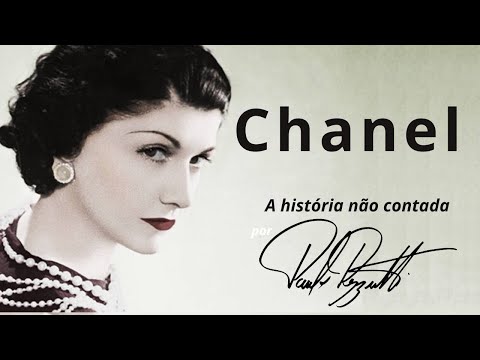
Chanel
Chanel is a French luxury fashion house founded in 1910 by Coco Chanel in Paris. It is privately owned by French brothers, Alain and Gérard Wertheimer, through the holding company Chanel Limited, established in 2018 and headquartered in London.
Coco Chanel era
The House of Chanel originated in 1909, when Gabrielle Chanel opened a millinery shop at 160 Boulevard Malesherbes, the ground floor of the Parisian flat of the socialite and textile businessman Étienne Balsan. Because the Balsan flat also was a salon for the French hunting and sporting élite, Chanel had the opportunity to meet their demi-mondaine mistresses who, as such, were women of fashion, upon whom the rich men displayed their wealth – as ornate clothes, jewellery, and hats. Coco Chanel would sell them the hats she designed and made, thus earning a living independent of Balsan. In the course of those salons, Coco Chanel befriended Arthur "Boy" Capel, an English socialite and polo player friend of Étienne Balsan; per the upper class social custom, Chanel also became mistress to Boy Capel. In 1910, Boy Capel financed her first independent millinery shop, Chanel Modes, at 31 Rue Cambon in Paris. Because that locale already housed a dress shop, the business-lease limited Chanel to selling only millinery products, not couture. Two years later 1913, the Deauville and Biarritz couture shops of Coco Chanel offered for sale prêt-à-porter sports clothes for women, the practical designs of which allowed the wearer to play sports.
Post-Coco era (1980s–present)
In 1981, Chanel launched Antaeus, an eau de toilette for men. In 1983 Karl Lagerfeld took over as chief designer for Chanel. Like Chanel, he looked into the past as inspiration for his designs. He incorporated the Chanel fabrics and detailing such as tweed, gold accents, and chains. Lagerfeld retained what was signature for Chanel but also helped bring the brand into the present. In later collections Lagerfeld chose to break away from the ladylike look of Chanel and began to experiment with fabrics and styles. During the 1980s, more than 40 Chanel boutiques opened worldwide. By the end of the 1980s, the boutiques sold goods ranging from US$200-per-ounce perfume, US$225 ballerina slippers to US$11,000 dresses and US$2,000 leather handbags. Chanel cosmetics and fragrances were distributed only by Chanel outlets. Chanel marketer Jean Hoehn explained the firm's approach, saying, "We introduce a new fragrance every 10 years, not every three minutes like many competitors. We don't confuse the consumer. With Chanel, people know what to expect. And they keep coming back to us, at all ages, as they enter and leave the market." 1984 saw the launch of a new fragrance in honor of the founder, Coco. In 1986, the House of Chanel struck a deal with watchmakers and in 1987, the first Chanel watch debuted. By the end of the decade, Alain moved the offices to New York City.
Exhibitions and retrospectives
The Palais Galliera featured a retrospective Gabrielle Chanel. Fashion Manifesto (October 1, 2020 – August 17, 2021). The exhibit later traveled to Mitsubishi Ichigokan Museum in Tokyo, National Gallery of Victoria in Melbourne (December 3, 2021 – April 25, 2022), and will debut at London's Victoria & Albert Museum (September 16, 2023). The ThyssenBornemisza National Museum in Madrid explored the relationship and reciprocal influence between Pablo Picasso and Gabrielle Chanel with a four-part exhibition (October 11, 2022 – January 15, 2023) spanning their works between 1915 and 1925. The Metropolitan Museum of Art, home to the annual Met Gala in the financial and fashion capital of New York City, first honoured the house with a (May 5-August 7) 2005 exhibit chronicling the work of Coco Chanel's designs dating back to the 1920s. The museum's Costume Institute also unveilled a posthumous retrospective exhibit to pay homage to longtime Creative Director, Karl Lagerfeld (May 5-July 16, 2023).
Philanthropy, sustainability, arts and culture
Fondation Chanel is the philanthropic arm of the house. Founded in 2011, some of the organization's key initiatives include promoting greater healthcare advocacy; addressing the disparities in gender-based violence; and "accelerating economic agency and empowerment". Fondation Chanel has partnered with organizations in Africa, Asia, Europe, Latin America, the United Kingdom, and the United States. Chanel announced (June 2021) an anchor investment in the Landscape Resilience Fund, contributing $25 million to farmers grappling with the impacts of climate change. Setting a new series of science-based targets, the company also launched the No.1 de Chanel beauty and fragrance line in 2022, with 97% naturally derived ingredients and eco-conscious packaging designed. The house also announced goals in accordance with the Paris Climate Agreement to reduce its carbon footprint by 50% by 2030 and reduce its emissions from value chain by 40% by 2030. As part of the Chanel Mission 1.5 Climate Action Plan, the brand has pledged to transition to 100% renewable electricity by 2025. The company is also sourcing eco-responsible tweeds; shifting to maritime transport with a goal of 80% shipments by sea by 2024; and supporting land and livelihood projects throughout communities in Africa, Southeast Asia, and Latin America. In January 2024, Chanel launched an initiative with the consortium of 15 cosmetics-manufacturers, called the Traceability Alliance for Sustainable Cosmetics to catalyze traceability in the cosmetics sector.
Arts and culture
The Chanel Culture Fund is a global program of initiatives and partnerships. Since its inception, the House has partnered with the National Portrait Gallery (London), The Centre Pompidou (Paris), and the Power Station (Shanghai). The Fund awards an annual prize (Chanel Next Prize) of €100,000 to ten artists in the fields of performing and visual arts. Yana Peel, global head of arts and culture said of the Fund in an interview with Harper's Bazaar, "At a time when we are navigating our way through complex new environments around the world, we know that artists generate transformative ideas that help us envision the way forward. Chanel has always championed the vitality and advancement of the arts, and we now expand that tradition through the Fund with a focus on supporting cultural innovators and path-breakers who are mapping out what's next."
The Chanel logotype comprises two interlocked, opposed letters C, one faced left and the other faced right. The logotype was given to Chanel by the Château de Crémat, Nice, and was not registered as a trademark until the first Chanel shops were established. The logo is commonly known to stand for "Coco Chanel" and has become one of the most recognizable logos in the world. It has also become the symbol of prestige, luxury, and class. In 2022, Chanel donated €2 million towards Care and UNHCR. The money will go to Ukraine to help it during the Russian invasion. Worldwide, Chanel S.A. operates around 310 Chanel boutiques; 94 in Asia, 70 in Europe, 10 in the Middle East, 128 in North America, 1 in Central America, 2 in South America, and 6 in Oceania. The shops are located in wealthy communities, usually in department stores like Harrods and Selfridges, Bergdorf Goodman, Neiman Marcus and Saks Fifth Avenue, high streets, shopping districts, and inside airports. In 2015, the company paid a record $152 million for 400 North Rodeo Drive in Beverly Hills. This is the most expensive amount paid for retail space in Los Angeles. In October 2020, the company bought its flagship Bond Street boutique in London for £310 million.
Trademarks
One timeline measurement for Chanel presence in the United States is via trademarks registered with the United States Patent and Trademark Office (USPTO). On 18 November 1924, Chanel, Inc. filed trademark applications for the typeset mark Chanel and for the interlocking CC design plus word mark. At that time, the trademarks were registered only for the perfume, toiletry, and cosmetic products in the primary class of common metals and their alloys. Chanel provided the description of face powder, perfume, Eau de Cologne, toilet water, lipstick, and rouge, to the USPTO. The Chanel and double-C trademarks were awarded on the same date of 24 February 1925 with respective Serial Numbers of 71205468 and 71205469. The first trademark application for the No. 5 perfume was on 1 April 1926, described as perfume and toilet water. First use and commercial use was stated as 1 January 1921. Registration was granted on 20 July 1926 with Serial Number 71229497.
The Artistic Director of the fashion house is over the entire creative division, but each division has its own director. Jacques Helleu (1938-2007) was Artistic Director (of image and marketing, and over fragrance, watches, and makeup) for more than four decades. He died at age 69 after a long illness. Karl Lagerfeld was Creative Director of Fashion from 1983 through his death in 2019. Virginie Viard succeeded to Lagerfeld's position and held it from 2019-2024. Matthieu Blazy has been Artistic Director since 2024. Since 2015, Olivier Polge has been the director over fragrance creation. Patrice Leguéreau was over watchmaking and fine jewelry until his death in 2024; he held the position since 2009. The position of jewelry and watchmaking director was finally filled in October 2026 by Marie-Laure Cérède, who had previously been at Cartier. Frédéric Grangié, president of Chanel watches and fine jewelry, joined the fashion house in 2016. Arnaud Chastaingt has been head of the watchmaking studio since 2013.
In 2018, Chanel acquired clothing brand Orlebar Brown, specializing in tailored men's swim shorts.
Handbag
Introduced in 1955, the Chanel 2.55 handbag revolutionized women's fashion by incorporating a shoulder strap, allowing for hands-free use. Over the years, Chanel has consistently updated its handbag designs while maintaining their classic appeal. For instance, in 1983, Karl Lagerfeld introduced the 11.12 handbag, featuring the now-iconic double-C logo. Chanel's pricing strategy has involved regular increases to reinforce the brand's exclusivity. The Classic Flap bag, for example, has seen its price rise from $220 at its inception to over $10,000 in recent years. These adjustments are influenced by factors such as rising material and labor costs, as well as strategic pricing decisions to maintain the brand's luxury positioning.
Fragrance
In 1924, Pierre Wertheimer founded Parfums Chanel, to produce and sell perfumes and cosmetics; the parfumerie proved to be the most profitable business division of the Chanel S.A. corporation. Since its establishment, parfumerie Chanel has employed four perfumers:
Makeup and skincare
Cosmetics are the most accessible Chanel product, with counters in department stores across the world, including Harrods, Galeries Lafayette, Bergdorf Goodman, Hudson's Bay and David Jones, Wojooh, Selfridges, John Lewis & Partners and Boots as well as its own beauty boutiques.
Fine jewellery
Chanel 'High Jewellery' was founded in November 1932. Chanel debuted 'Bijoux de Diamants' at her Faubourg Saint-Honoré, Paris mansion. It was also the first high-end jewelry collection created by a fashion designer. The 'Bijoux de Diamants' was inspired by celestial forms such as stars, comets, and the moon. Gabrielle Chanel designed an estimated 50 pieces with white and yellow diamonds set in platinum and yellow gold. The collection, a collaboration with the London Diamond Corporation, aimed to revitalize the diamond trade during the Great Depression. In 2012, the company created a special collection to celebrate Diamants' 80th anniversary. Current collections include High Jewelry, Camelia, Comete, Coco Crush, Baroque, 1932, Ultra, Bridal and Jewelry Watches.
Watches
The Chanel wristwatch division was established in 1987. In 1995, division presented a second design, the Matelassé. Although the Première and Matelassé wristwatches were successful products, the presentation, in 2000, of the Chanel J12 line of unisex style wristwatches, made of ceramic materials, established Chanel wristwatches as a Chanel marque. The J12 line of wristwatches features models in four dial-face sizes: 33mm, 38mm, 41mm, and 42mm. In 2008, Chanel S.A. and Audemars Piguet developed the ceramic Chanel AP-3125 clockwork, exclusive to the House of Chanel. As of 2024, Chanel holds 25% stake in MB&F, 20% in F. P. Journe and undisclosed stakes in Romain Gauthier and Bell & Ross.
Wine
Chanel owns the wineries Château Rauzan-Ségla, Château Canon, St. Supéry Estate Vineyards & Winery, and Domaine de i'lle located on the island of Porquerolles in the Cotes de Provence AOP.